Politics
Rahul Gandhi Emerges as Opposition's Face, But Can He Beat Modi in 2029?
After a fiery Bharat Summit speech and the decline of key regional rivals, Rahul Gandhi is consolidating the INDI Alliance, but Congress's record raises doubts about his path to 2029.
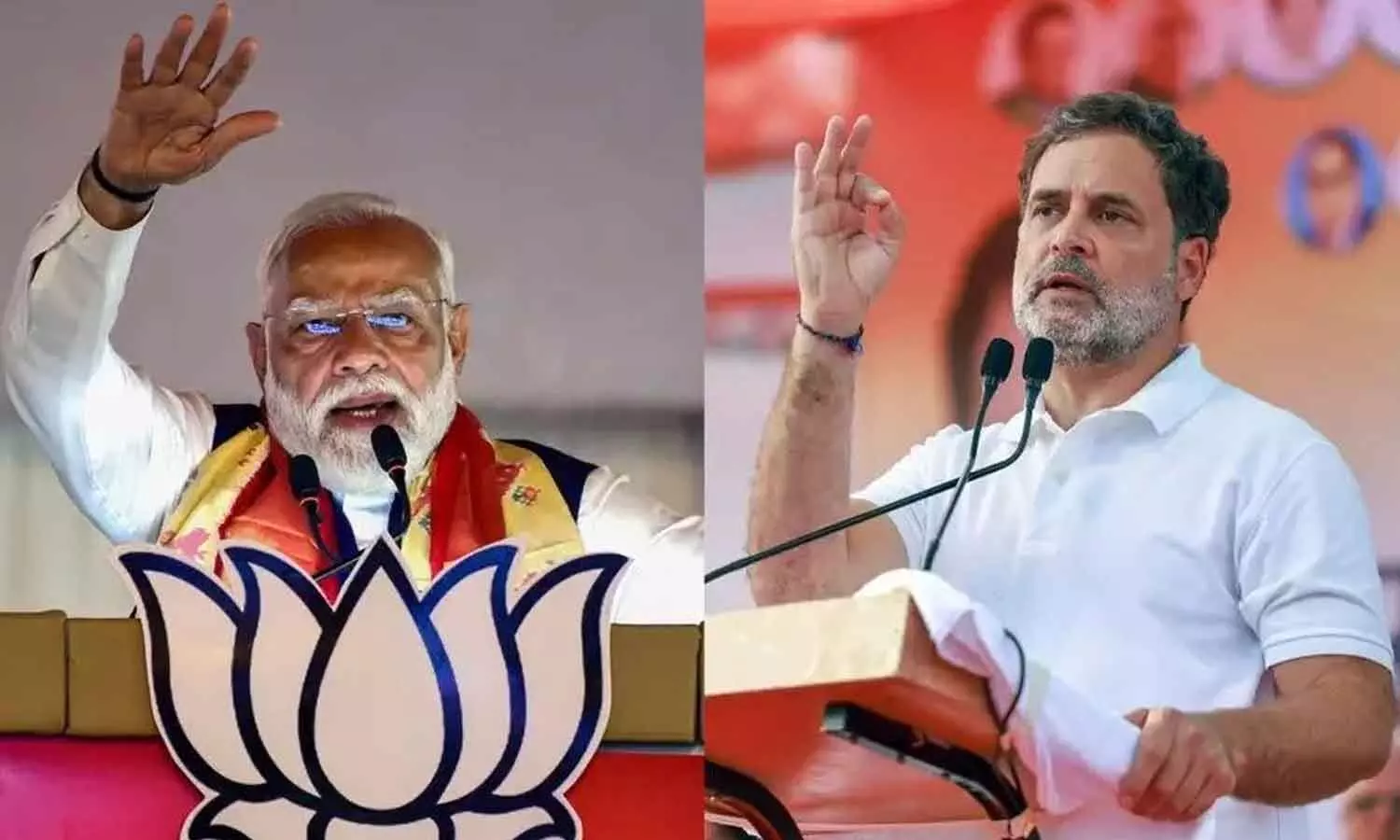
Rahul Gandhi used the valedictory session of the two-day Bharat Summit in Hyderabad to launch his sharpest attack yet on Prime Minister Narendra Modi, without naming him. The Leader of Opposition in the Lok Sabha said India had fallen into the hands of fascists over the last decade, and he vowed to defeat them with 'truth, love and non-violence'. He also questioned whether democracy still exists in the country, then declared that his victory over Modi 'is a done deal.'
The target was not hard to identify. Rahul Gandhi has been nursing a long-running grievance against Modi, who kept Congress out of power in Gujarat for more than 25 years and has since steered the BJP to three consecutive national victories and power in more than 20 states. The question now dominating opposition circles is whether Rahul can stop Modi from becoming the first prime minister to win a fourth straight term in 2029.
Rahul's rise within the opposition has come from two sources. He has adopted a more combative street style, leading protests over paper leaks in recruitment exams and alleged irregularities in voter rolls that he says favour the BJP. He has also benefited from the weakening of regional heavyweights, most notably Mamata Banerjee in West Bengal. Arvind Kejriwal of the Aam Aadmi Party is also struggling, and both leaders once had national ambitions of their own. For now, Rahul faces no serious rival for the role of opposition figurehead.
Rallying the opposition is one challenge. Beating Modi at the ballot box is another, and Congress's recent record offers little reassurance. The Bharat Summit illustrates the problem. The Telangana government, led by Chief Minister Revanth Reddy, hosted delegates from around 70 countries to discuss democracy and global policy, an agenda that sits awkwardly with a state administration. To many observers the event looked more like a party showcase than a state initiative, and it handed the BJP and the Bharat Rashtra Samithi a ready-made line of attack. Ministers defended it as an investment drive, yet Rahul's keynote made no mention of investment in Telangana.
The stakes in Telangana are high. Winning the 2028 Assembly elections there is widely seen as important for Congress if it hopes to mount a serious challenge in 2029. Yet the summit suggests the party may be taking voters for granted, or doubting its own prospects in the state. Either reading carries risk.
Congress has a long history of strategic missteps, and critics point to its 2019 decision to partner with the Shiv Sena, later Shiv Sena (UBT), in pursuit of power as one of its most consequential. Rahul's momentum is real, but the opposition's path to 2029 will depend on whether he can turn street-level agitation and high-profile rhetoric into disciplined electoral strategy. For now, the gap between the speech and the strategy is the story to watch.